
Laboratory Updates
A Complete Guide to Blood Tests: Types, Benefits and Preparation
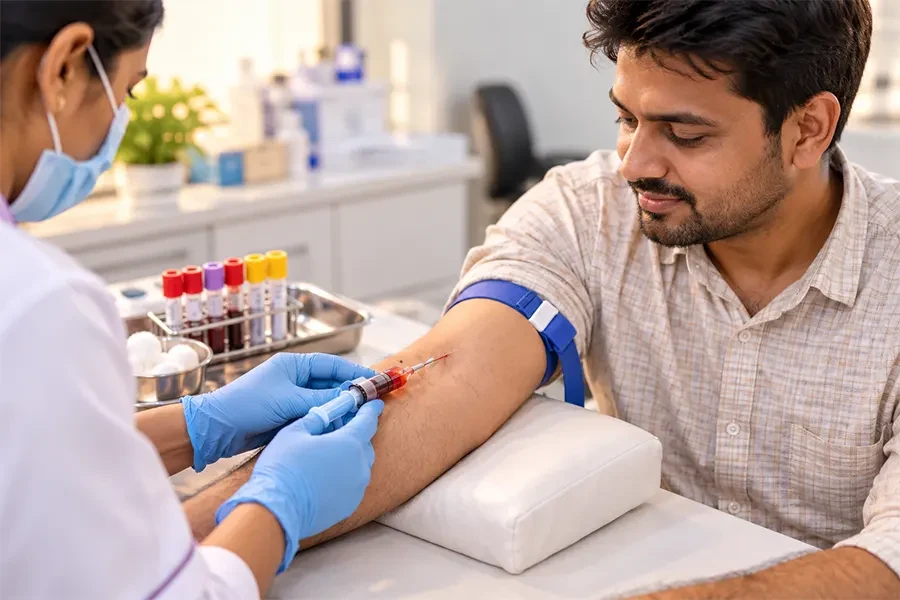
Blood tests provide valuable insights into your health and help doctors investigate symptoms, monitor medical conditions and plan appropriate care. Discover the importance of common blood investigations, specialized diagnostic tests and proper preparation before visiting Shri Krishna Pathology & ELISA Laboratory in Sumerpur, Rajasthan.
Understanding your health begins with having the right information. Blood tests are among the most frequently recommended medical investigations because they help healthcare professionals assess different aspects of the body, from blood cell counts and glucose levels to hormone activity and organ function.
Whether you have been advised to undergo a routine health check or require a specialized investigation, knowing the purpose of your test can make the process easier and less confusing.
At Shri Krishna Pathology & ELISA Laboratory in Sumerpur, Rajasthan, patients can enquire about a broad range of routine and specialized diagnostic investigations, along with their preparation requirements and expected reporting times.
Why Are Blood Tests Important?
Blood carries oxygen, nutrients, hormones and other substances throughout the body. Examining a blood sample allows laboratory professionals to measure selected components and identify findings that may need further medical evaluation.
Depending on the situation, a doctor may recommend blood tests to investigate unexplained symptoms, assess general health, monitor an existing condition or evaluate a patient's response to treatment.
Some investigations are intended for screening, while others are ordered to answer a specific clinical question. The selection of tests should therefore depend on individual medical needs rather than following the same testing schedule for everyone.
Common Types of Blood Tests and What They Reveal
1. Complete Blood Count (CBC)
A Complete Blood Count evaluates the major components of blood, including red blood cells, white blood cells and platelets.
Red blood cells carry oxygen, white blood cells participate in immune defence, and platelets help the blood clot. Measuring these components can help doctors investigate anemia, certain infections and other blood-related abnormalities.
The results are generally assessed alongside symptoms, medical history and other relevant investigations.
2. Diabetes and Blood Glucose Testing
Glucose testing helps measure blood sugar levels and supports the evaluation and management of diabetes.
Different investigations provide different types of information. A fasting blood glucose test measures glucose after a specified fasting period, while HbA1c estimates average blood sugar levels over approximately the previous two to three months.
Depending on the clinical requirement, a doctor may recommend additional tests such as insulin or C-peptide measurements.
Following the correct preparation instructions is important because requirements differ between investigations.
3. Thyroid and Hormone Investigations
Hormones act as chemical messengers that influence many functions, including metabolism, growth and reproduction.
Thyroid investigations may include TSH, T3, T4, Free T3 and Free T4. Other hormone tests may assess parameters such as prolactin, cortisol, testosterone, progesterone or anti-Müllerian hormone (AMH).
These investigations can help evaluate suspected hormonal imbalances and support the assessment of selected reproductive and endocrine conditions.
Not every patient needs a complete hormone panel. The appropriate tests depend on the symptoms, medical history and advice of the treating healthcare professional.
4. Liver and Kidney Function Investigations
The liver and kidneys perform essential functions that help maintain the body's internal balance.
Liver-related investigations may measure bilirubin, selected enzymes and proteins. Kidney-related tests may include creatinine, urea and electrolytes, with additional measurements used when appropriate.
Doctors may recommend these tests when investigating particular symptoms, monitoring known medical conditions or assessing health before or during certain treatments.
Individual laboratory values should not be interpreted in isolation because several factors can influence the results.
5. Vitamin and Iron-Related Testing
Persistent tiredness, weakness and other nonspecific symptoms can have several possible causes. When clinically appropriate, doctors may recommend tests that assess nutritional status or iron availability.
Examples include vitamin B12, vitamin D, ferritin, an iron profile and folic acid.
Each investigation measures something different. For example, ferritin provides information about the body's stored iron, while vitamin B12 testing assesses the level of this essential vitamin in the blood.
The decision to test should be based on clinical assessment, and any confirmed deficiency should be managed with appropriate medical advice.
6. Cardiac Biomarkers
Cardiac biomarker investigations help doctors evaluate specific cardiovascular concerns.
Tests such as troponin may be used when heart muscle injury is suspected. Other investigations, including selected cardiac markers and lipid measurements, have different roles in cardiovascular assessment.
The correct investigation depends on the clinical situation. Symptoms suggestive of a heart attack, such as chest pressure, difficulty breathing or sudden unexplained discomfort, require urgent medical evaluation rather than waiting for a routine appointment or laboratory report.
7. Infection and Immunology Testing
Certain laboratory investigations help detect or assess infections and immune-related conditions.
Depending on the suspected condition, testing may involve antigen or antibody measurements, selected serological investigations, molecular tests or microbiological culture.
Examples include hepatitis-related testing, dengue investigations, selected autoimmune markers and PCR-based tests for particular infections.
These tests are not interchangeable. The appropriate method depends on factors such as the suspected infection, timing of symptoms, clinical history and the question that needs to be answered.
Understanding Specialized Immunoassay Testing
Immunoassays are laboratory methods that use specific interactions between antibodies and antigens to detect or measure selected substances in a sample.
Depending on the method, immunoassays may be used for hormone measurements, certain cardiac markers, infectious disease investigations, tumor markers and other specialized diagnostic parameters.
Modern platforms can automate several stages of testing, helping laboratories follow structured analytical workflows.
However, the reliability of a result depends on more than the instrument alone. Factors such as sample quality, test methodology, appropriate quality checks and interpretation of findings also matter.
At Shri Krishna Pathology & ELISA Laboratory, patients can contact the laboratory team to enquire about specialized immunoassay investigations and confirm whether their prescribed test is available.
How to Prepare Before Giving a Blood Sample
Correct preparation helps ensure that your sample is collected under the conditions required for your particular investigation.
Confirm whether fasting is necessary. Some tests require fasting, while many others do not. Always check the specific instructions instead of assuming that every blood test must be performed on an empty stomach.
Follow your doctor's medication advice. Do not stop prescribed medicines or change their dosage without consulting your healthcare professional.
Check the recommended collection time. Certain tests may require collection at a particular time or under specific conditions.
Bring previous medical reports. Earlier reports can help your doctor compare results and understand changes over time.
Ask about special sample requirements. Some specialized investigations may require advance scheduling, specific collection conditions or additional processing arrangements.
When in doubt, contact the laboratory before visiting so you can prepare appropriately.
What Happens After Your Sample Is Collected?
After collection, the sample is handled according to the requirements of the requested investigation. Depending on the test, laboratory professionals may use automated analyzers, immunoassay systems, biochemical methods or other specialized testing platforms.
Sample identification, appropriate handling, quality checks and result review are important parts of the laboratory workflow.
Once processing is complete, the findings are compiled into a report. Reporting time varies according to the investigation, sample requirements and processing schedule. Some tests may have same-day reporting, whereas specialized investigations can take longer.
Your doctor interprets the report in conjunction with your symptoms, medical history and any other relevant findings.
Do Abnormal Blood Test Results Always Mean a Disease?
Not necessarily. A result outside the laboratory's reference interval does not automatically establish a diagnosis, and a result within the reference interval does not always rule out a medical condition.
Interpretation may depend on factors such as age, symptoms, medicines, recent illness and the specific testing method.
Some results require repeat testing or additional investigations before their significance becomes clear. If a report contains an unexpected finding, discuss it with your healthcare professional rather than starting treatment based on the number alone.
Similarly, specialized markers such as tumor markers generally cannot confirm or exclude cancer on their own. They must be considered alongside the relevant clinical assessment and investigations.
Choosing a Diagnostic Laboratory in Sumerpur
When arranging a laboratory investigation, it is helpful to consider whether the laboratory can perform the required test, explain its preparation requirements and provide clear information about reporting timelines.
Shri Krishna Pathology & ELISA Laboratory serves patients and healthcare providers in Sumerpur and surrounding areas of Rajasthan with routine and specialized diagnostic services.
The laboratory's areas of testing include:
Hematology and anemia-related investigations
Diabetes and metabolic testing
Thyroid and hormone investigations
Clinical biochemistry and organ function testing
Cardiac biomarkers
Infection and serology investigations
Immunology and autoimmune testing
Selected molecular diagnostic investigations
Microbiology and culture testing
Tumor markers and other specialized investigations
Test availability, sample requirements, pricing and reporting times may vary. Patients are encouraged to confirm these details before visiting, particularly for specialized investigations.
Frequently Asked Questions
Is fasting necessary before every blood test?
No. Fasting depends on the specific investigation. Follow the preparation instructions provided by your doctor or laboratory.
Can I get my blood test report on the same day?
Same-day reporting may be available for selected investigations. The expected time depends on the test and its processing requirements.
Which blood tests should I get for a routine health check?
There is no single panel that is suitable for everyone. Your doctor can recommend appropriate investigations based on your age, medical history, symptoms and individual risk factors.
Are specialized tests available at Shri Krishna Pathology & ELISA Laboratory?
The laboratory offers a range of routine and specialized diagnostic investigations. Contact the team to verify the availability, sample requirements and reporting schedule of your prescribed test.
How should I understand my laboratory report?
A healthcare professional should interpret your report using your symptoms, medical history and any other necessary information. Avoid diagnosing or treating a condition using an isolated result.
Get Information About Your Diagnostic Test
Being informed about your investigation can help you prepare correctly and make your laboratory visit more straightforward.
For enquiries about test availability, sample collection, preparation requirements or report timings, contact:
Shri Krishna Pathology & ELISA Laboratory
Address: 14, Panchayat Samiti, Jawai Bandh Road, Sumerpur – 306902, Rajasthan
Phone: 02933-252959
Mobile: +91 94132 52959
Working Hours: Every day, 7:00 AM – 10:00 PM
Explore the diagnostic services offered by Shri Krishna Pathology & ELISA Laboratory or speak with our team before your visit.
Medical disclaimer: This article is intended for general educational purposes and does not replace professional medical advice, diagnosis or treatment.